
Internationally Overlooked ARSA’s Terrorist Acts at Myanmar’s Western Gateway
When we speak of a nation, its sovereignty and territorial integrity are as vital as life itself. No government of any country in the world would simply look on and do nothing if terrorists launched attacks against its security forces, police outposts, and innocent civilians. Such a response is legitimate both under international law and under a nation’s right to self-defence.
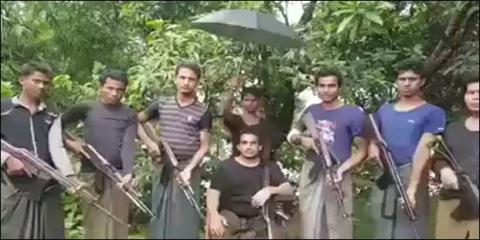
What will be discussing today is a frightening truth that is being concealed under the banner of “human rights,” widely portrayed and amplified by global media outlets. That truth concerns the brutal acts of the terrorist group ARSA (Arakan Rohingya Salvation Army), which has taken root in the Maungdaw area of Rakhine State, which is Myanmar’s western gateway, as well as the political manoeuvring and deceptive actions operating behind it.
The Government of Myanmar has designated the ARSA group as a terrorist organization in accordance with the law since 25 August 2017. The root cause of the case between Myanmar and The Gambia at the International Court of Justice (ICJ), which has attracted global attention, is the ARSA. The case began in 2019 following the Tatmadaw’s response conducted in accordance with the Rules of Engagement (ROE) in response to the ARSA’s terrorist acts.
Although it has now reached the year 2026, the cases brought against Myanmar at the International Court of Justice (ICJ) have still not been concluded. Myanmar is still facing the lawsuit filed by The Gambia, which accuses the country of committing genocide. In this case brought by The Gambia, the international community has been encouraged to perceive Myanmar as a human rights violator; however, the extremist terrorist group ARSA (Arakan Rohingya Salvation Army), which is the real perpetrator behind the victims of terrorist attacks, killings, and mass displacement on the ground, appears to be deliberately ignored. It is particularly astonishing to hear that the ARSA group is concealed to the extent that it does not even exist in the submissions of The Gambia, the plaintiff in this case.
If one assumes that ARSA is merely a small rebellion group harbouring a grievance against locals, it would be a serious mistake. A solid organizational structure, support from international extremist networks, and key objectives lie behind it. While much of the international media seeks to portray ARSA as “freedom fighters”, a closer examination of its origins reveals clear links to extremist terrorist ideology. The leader of ARSA (formerly known as Aqa Mul Mujahidin) is a man named Ataullah, also known as Hafiz Tohar, aged 45, who was born in Karachi, Pakistan, raised in Mecca, Saudi Arabia, and later moved to Kyaukpyinseik Village in Maungdaw Township, Myanmar.
Hafiz Tohar is an individual who underwent six months of military training with the Taliban, a terrorist organization based in Pakistan. He was not a lone actor but operated with a core group of 12 members, including Pakistani national Khalid, and Ibrahim, Azza and Arab Tullah, residents of the Kutupalong refugee camp in Bangladesh. They were associated with the RSO terrorist group and initiated terrorist activities in the Maungdaw region under the name Aqa Mul Mujahidin. Their group received financial support from certain religious leaders in Saudi Arabia and maintained connections with international terrorist networks.
The ARSA group did not emerge suddenly. It traces its origins to the Mujahideen insurgents of 1948, evolving through stages such as RLP, RPF, and RSO. In 2016, it began operations under the name of Aqa Mul Mujahidin (AMM) and later changed its name to ARSA. Their objective is clear: to carve out areas, including Maungdaw, Buthidaung, and Rathedaung in the northern Rakhine State from Myanmar’s map and establish a new state called Arkistan. To achieve this goal, they received financial and technical support from extremist organizations in countries such as Saudi Arabia and Pakistan. To realize this ambition, they had devised a brutal four-stage grand plan.
In the first phase, Bengalis connected to government departments would be labelled as traitors and assassinated. In the second phase, Bengalis who disobeyed ARSA’s orders would be killed. In the third phase, local ethnic people (Rakhine, Mro, and Daingnet) would be killed and forced to flee their homes. Finally, in the fourth phase, security personnel and their outposts would be attacked in order to seize territory. This is not a political claim. It is clearly nothing but terrorism.
Looking at what ARSA has actually done, it is evident that the ARSA organization is not composed of ordinary Bengali civilians of Bengali. At around 1:30 am on 9 October 2016, the terrorist organization led by Hafiz Tohar launched simultaneous surprise attacks on Border Guard Police Command Headquarters No 1 (Kyee Kan Pyin), the Koe Tan Kauk Police Station, and the Nga Khu Ya area offices in the Maungdaw region. As a result, nine police members died in battle, while six police members and one civilian were injured. A total of 67 firearms of various types, 6,624 rounds of ammunition, 47 bayonets, and 164 magazines from the government police force fell into the hands of the terrorists.
According to records up to 28 February 2017, ARSA terrorists murdered them and set fire to their homes after accusing innocent civilians of being government informants. As a result, 963 buildings in 17 villages were burnt to the ground. During the same period, 18 innocent civilians were killed, and six were injured due to the attacks. These facts clearly demonstrate that ARSA is not a human rights movement, but purely a terrorist organization that brings suffering to innocent civilians.
That was only the beginning. A larger-scale military operation was carried out by ARSA on 25 August 2017. At around 1 am, more than 4,000 to around 10,000 ARSA extremist forces gathered and simultaneously attacked 30 police outposts and one battalion headquarters in the Maungdaw and Buthidaung regions.
This was not a normal attack. It was a well-organized military operation utilizing hundreds of forces. Ever since then, it has become evident that they were destroying regional peace and stability and initiating terrorism. On that single day alone, 38 clashes occurred, resulting in the loss of 12 security personnel and 6 weapons. Due to these attacks, 11 security personnel and one Immigration Department staff member were killed. Moreover, ARSA members also planted mines on roads and blew up bridges. International community should consider that situation. Which government would remain passive if thousands of armed men simultaneously attacked 30 police stations in its country? Could the Myanmar government afford to look on the situation without conducting any counter-terrorism operations? It must be clearly understood whether this is a claim for human rights or an act of terrorist aggression.
The Hafiz Tohar’s group did not only carry out terrorist attacks. They also disseminated extremist propaganda through social media platforms, releasing around 10 video files. In his video files, he proclaimed statements like ‘Only Islam must exist in the Arakan region’ and explicitly incited with calls such as ‘Come kill the members of other faiths, carry out Jihad, everyone come out.’ The undeniable truth of their terrorist acts is evident in the video files circulating on social networks, accompanied by translations in Myanmar and English, showing their arson attacks against Rakhine villages while giving commands in the Bengali language.
The most horrific aspect of ARSA’s actions is the killings based on racial hatred. ARSA did not target only security personnel, but it also deliberately attacked and murdered local ethnic communities and Hindu civilians. On the morning of 25 August 2017, ARSA terrorists abducted 52 Hindus from Yebaukkya Village and 53 from Khamaungseik (South) Village, totalling 105 people. Among them, the remains of 45 Hindu victims were later exhumed after they had been brutally beheaded and buried together in a mass grave.
Nor did the violence end there. ARSA also mercilessly murdered members of the local Mro ethnic people and the local Daingnet people. Even more horrifying is the fact that ARSA also beheaded followers of Islam, whom it regarded as traitors for rejecting its violent ideology or for allegedly cooperating with the government. These facts demonstrate that ARSA is not a group for the human rights movement, but rather an extremist terrorist organization, similar to ISIS.
The Government merely conducted counter-terrorism operations in response to ARSA’s terrorist attacks. Contrary to the accusations made by The Gambia and the OIC at the ICJ, there has been absolutely no genocide or extermination of the Bengali population in Myanmar. In any country in the world, when terrorists threaten territorial integrity and murder innocent civilians, the government has a responsibility to protect its citizens. The Myanmar Armed Forces and the police force targeted only ARSA terrorists and carried out their operations in accordance with the Rules of Engagement (ROE) to avoid harm to innocent civilians, as documented in investigation reports.
Behind the widely cited claims that hundreds of thousands of refugees have fled, there is also a major political trap orchestrated by ARSA. The ARSA group used Bengalis as human shields, and when their attacks failed, they themselves set villages on fire and fled. They then threatened ordinary Bengali villagers, saying, “If you do not flee, the government troops will come and kill you,” and “If you do not follow us, you will be killed as traitors,” thereby forcing them to flee to the other country. At the same time, they enticed them with promises such as, “Once you reach the other country, you will live well with international aid and be resettled in a third country.” Their objective was solely to create a refugee crisis and bring international pressure to bear on Myanmar.
As of now, until the 2026 ICJ case proceedings, the lawyers representing The Gambia have almost completely avoided mentioning the role of ARSA. Moreover, they have not addressed the fact that over 6,000 to 10,000 terrorists launched attacks using weapons and mines. Likewise, they cannot provide answers on how to resolve or compensate for such incidents.
Looking at the statements made by Mr Suleman, the lawyer for The Gambia, in a BBC interview, it is evident that their objective leans more toward seeking compensation from Myanmar rather than pursuing justice. They have turned a blind eye to ARSA’s terrorist acts and only referred to one-sided FFM (Fact-Finding Mission) reports. These reports do not reflect the true situation on the ground and are politically biased. The reluctance of the United Nations and international organizations to designate ARSA as a terrorist organization is very dangerous. This amounts to the indirect encouragement of terrorism.
Up to 2026, ARSA has not disappeared, and they continue to hide in border areas and carry out terrorist activities through various means. They are still recruiting new members in refugee camps and threatening and killing those attempting to return. Myanmar, which is facing legal proceedings at the ICJ, continues to firmly address the situation in accordance with the law. Therefore, the international community should open its eyes and recognize the truth: Myanmar is not attacking the Bengali people out of hatred, but rather carrying out Counter-Terrorism Operations against the ARSA terrorist group, which poses a threat to the state.
The threat posed by ARSA to Myanmar’s western gateway is not a problem for Myanmar alone. All countries opposing terrorism need to acknowledge and combat collectively such threats as a common enemy. The international community should not forget that while it tends to label all Bengalis as refugees, every member of ARSA is also Bengali. Myanmar, for its part, is responding with dignity and on solid legal grounds to the realities arising from the terrorist attacks carried out by the ARSA group against Bengali communities and the local Rakhine ethnic population. This article highlights the fact that it is now time to recognize and respect Myanmar’s legitimate right to self-defence.
#TheGlobalNewLightOfMyanmar