National Advisory Committee holds meeting on rights, opportunities for women migrant workers

Submitted by admin on 5 September 2020

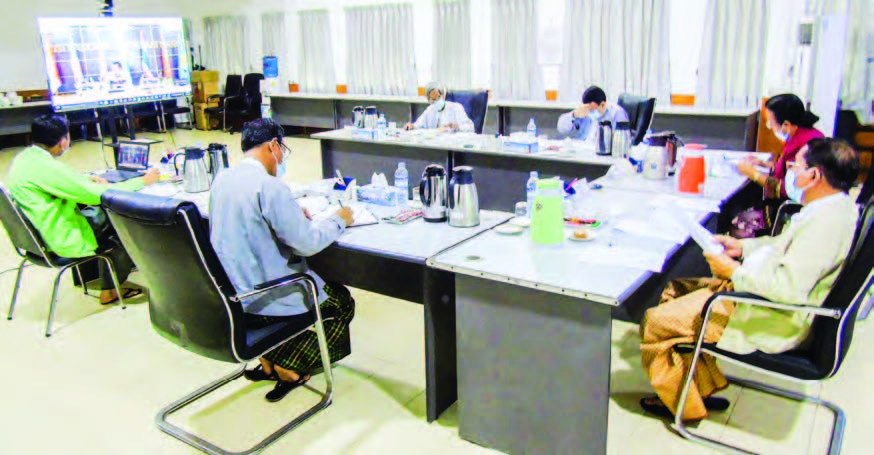
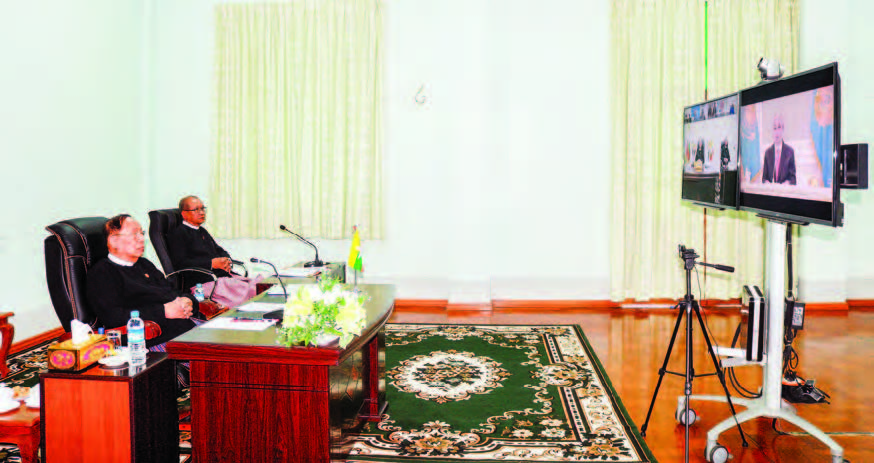
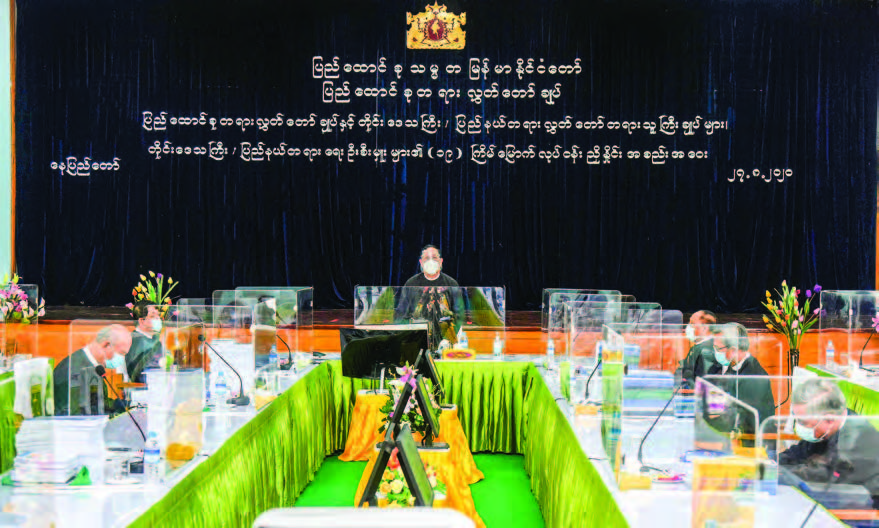
THE National Advisory Committee held a meeting on the rights and opportunities for women migrant workers in ASEAN region yesterday under the Safe and Fair Project jointly implemented by the Ministry of Labour, Immigration and Population, the International Labour Organization and the UN Women Myanmar.

Union Minister U Thein Swe, Deputy Minister U Myint Kyaing, Permanent Secretary U Myo Aung, Director-General for Department of Labour U Win Shein, Director-General for Department of Social Welfare Dr San San Aye, members of national consultative committee, UN Resident and Humanitarian Coordinator Mr Ota Almgren of UN Resident Coordinator Office, EU chargé d’affaires Dr Johann Hess, Liaison Officer Mr Donglin Li of ILO Myanmar and Country Representative Mr Nicholas Burniat of UN Women Myanmar joined the meeting.

During the meeting, the Union Minister said that the meeting was held with the aim of providing the effective ways in implementing the Safe and Fair Project, sharing advices to ILO and UN Women Myanmar, emerging of safe and fair migration, reducing the negative impacts of trafficking in persons, reviewing the results and reports of project.

According to the Safe and Fair Project, the preliminary training was provided to staff of committee on migrant workers and the Migrant Worker Resource Centres (MRCs) were opened in Hinthada, Aunglan and Loikaw and the new one will be in Mohnyin.

The officials of Ayeyawady Region need to conduct the educating programmes regarding the migration in line with the health guidelines of National-level on Prevention, Control and Treatment of COVID-19 and the Ministry of Health and Sports.

The relevant ministries and organizations also need to cooperate to overcome the challenges and to provide the women migrant workers not to lose their legal rights in workplaces, to protect them from violence, to provide job opportunities for than 150,000 migrants who returned to the country during COVID-19 pandemic and to prioritize all the workers including migrant employers who were seriously hit by COVID-19 in forthcoming process of Safe and Fair Project.

Then, the officials of UN Resident Coordinator Office, EU chargé d’affaires, ILO and UN Women Myanmar delivered remarks and briefed the migration, women’s development programmes, 2020 working plans of Safe and Fair Project and other activities in ASEAN regions.

MNA

PHOTO : MNA

(Translated by Khine Thazin Han)

#The_Global_New_Light_of_Myanmar

Government of Myanmar marks important milestone toward unbundled New Urban Development Area of Yangon City

Submitted by admin on 5 September 2020

THE Government of Myanmar yesterday announced the awarding of a contract to Roland Berger Co. Ltd., for end-to-end for consulting services to finalize a Swiss Challenge tendering process for the recently announced New Industrial Park and Essential Ancillary Infrastructure as part of an unbundled New Development Area of Yangon City project.

Upon announcing the winner, U Thaung Tun, Union Minister of Investment and Foreign Economic Relations stated:

“Today we mark an important milestone. We are taking the first steps toward the realization of our vision of a new modern city on the other side of the Yangon River. In keeping with the times and the need to create more quality jobs to mitigate the adverse effects of the COVID-19 pandemic on the country’s economy, we have decided to focus first on the setting-up of the industrial zone. The unbundling of the development project, while safeguarding its commercial viability, will ensure that international global best practice is adhered to, including through open international competitive tendering.”

Roland Berger is a leading global consultancy firm, whose work in Myanmar has included advising on crucial economic reforms, including telecoms and banking liberalization, infrastructure development, and state-owned enterprise reform since establishing a permanent presence in Yangon in 2012.

Consultancy services will cover the end-to-end preparation and execution of the Swiss Challenge process, including support for communicating the outcome of the process to external stakeholders as well as support to the negotiation, preparing, revising and signing of the concession agreement.

Key projects to be developed will include an industrial park, low-cost housing estates, water supply and sanitation systems, waste management and other essential infrastructure. Projects to be developed are expected to contribute to Myanmar’s continued sustainable development, creating new quality employment opportunities, including within the country’s rapidly expanding manufacturing sector that has proven resilient despite challenges posed by COVID-19.

The event was attended by the Myanmar Swiss Challenge Tender Committee chaired by U Kyaw Myo, Deputy Minister, Ministry of Transport and Communication, with Dr U Set Aung, Deputy Minister, Ministry of Planning, Finance and Industry, U Bharat Singh, Deputy Minister, Ministry of Investment and Foreign Economic Relations, and U Ye Min Oo, Minister for Planning and Finance, Yangon Region Government serving as members, and Daw Hlaing Maw Oo, Secretary, Yangon City Development Committee serving as Secretary.

MNA

PHOTO : MNA

#The_Global_New_Light_of_Myanmar

MoPFI hands over 4 ambulances to MoHS

Submitted by admin on 5 September 2020

THE Ministry of Planning, Finance and Industry (MoPFI) handed over four ambulances to the Ministry of Health and Sports (MoHS) in Nay Pyi Taw yesterday.

A ceremony to hand over the ambulances was held at the Ministry of Health and Sports and attended by Union Minister for Planning, Finance and Industry U Soe Win, Union Minister for Investment and Foreign Economic Relations U Thaung Tun and Union Minister for Health and Sports Dr Myint Htwe.

Speaking at the event, Union Minister for Planning, Finance and Industry U Soe Win said the ministry has sold a total of 12 ambulances to the Public Health Department of the Ministry of Health and Sports in 2019-2020FY.

The four ambulances were handed over in first batch yesterday, and remaining eight vehicles will also be handed over in this month. Inside the vehicles were installed with Italian Brand Spancer medical equipment and Turkey Brand Trimming Part.

The standard type ambulances were installed with 12 medical equipment.

Depending on order letters, the ministry will manufacture the ambulances of basic type and advance type.

If the Ministry of Health and Sports additionally purchases medical supplies with CERP fund, the ministry is prepared for fulfilling the required medical supplies.

The ministry will distribute the medical supplies in accordance with international standard GMP guidelines.

Union Minister U Thaung Tun said COVID-19 Economic Relief Plan-CERP was adopted on 27 April 2020. Relevant state/region governments are carrying out the CERP tasks with seven goals.

Under CERP, a total of US$ 1.2 billion and Japanese Yen 30 billion loans were obtained, and the assistance of US$84.53 million, €6.2 million, K10 million and Japanese Yen 2billion were received, he added.

Union Minster Dr Myint Htwe said that the four ambulances would be used in COVID-19 control processes.

He expressed thanks to the Ministry of Planning, Finance and Industry for manufacturing the vehicles and the Ministry of Investment and Foreign Economic Relations for international assistance.

The assistance of the ministries is very beneficial for the public in battling against COVID-19.

The ministry is also producing paramedics who can well operate the medical equipment on the ambulances, he added.

Deputy Minister for Planning, Finance and Industry Dr Min Ye Paing Hein handed over the documents for the four ambulances to Deputy Minister of Health and Sports Dr Mya Lay Sein.

The Union Ministers and officials then inspected the ambulances.

MNA

PHOTO : MNA

(Translated by Kyaw Zin Tun)

#The_Global_New_Light_of_Myanmar

155 Myanmar nationals return from Japan

Submitted by admin on 28 August 2020

AN All Nippon Airways (ANA) relief flight brought 155 Myanmar citizens from Narita International Airport in Japan and landed at Yangon International Airport yesterday evening.

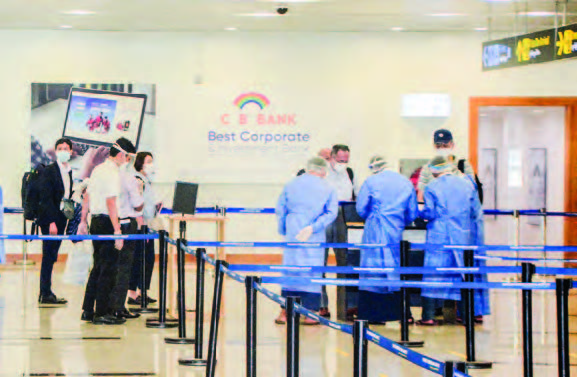
The Ministry of Labour, Immigration and Population, the Ministry of Health and Sports, and local officials helped the returnees for health inspections and arranged for 21-day quarantine.

 To bring back the Myanmar citizens who are stranded in foreign countries by relief flights and chartered flights in accordance with the instructions of National-Level Central Committee on Coronavirus Disease 2019 (COVID-19), the Ministry of Foreign Affairs cooperated with the relevant ministries and Myanmar embassies from respective countries.

A total of 5 relief flights have been organized between Myanmar and Japan and another relief flight is scheduled for 3 September.

MNA

(Translated by Khine Thazin Han)

Photo- MNA

Ref: The Global New Light of Myanmar

MNHRC attends 2nd meeting of SEANF

Submitted by admin on 28 August 2020

THE Southeast Asia National Human Rights Institutions Forum (SEANF) convened its second meeting from 25 August to 27 August through video conferencing.

Chairman of Myanmar National Human Rights Commission U Hla Myint, Vice–Chair Dr Nanda Hmun and the commission members U Paw Lwin Sein, Dr Than Myint and Dr Tin Maung Maung Than participated in the virtual meeting.

 The Indonesia National Human Rights Commission, acted as the rotating chair for 2020, delivered the opening speech on the meeting’s first day.

Human rights commission representatives from Malaysia, Philippines, Thailand and Timor-Leste, the chairperson of Indonesia National Human Rights Commission, its members and officials attended the meeting.

The first day of the meeting discussed the performance of the member countries and the improvements after the first meeting of the forum and approved the report of the first meeting held from 12 May to 14 May.

The second-day meeting discussed setting guidelines of SEANF’s social media, its rules on prevention of torture, the forum’s paper on migrant workers in South East Asia and protecting human rights defenders.

The third day agenda included the establishment of the Permanent Secretariat for SEANF, the progress on launching SEANF Website, holding annual meeting of SEANF for 2020, the cooperation between SEANF and The ASEAN Intergovernmental Commission on Human Rights (AICHR) .

MNHRC Chair U Hla Myint and commissioner members participated in the discussion in accordance with the subjects of matter and the Chair of the forum concluded the meeting.

MNA

(Translated by Ei Phyu Phyu Aung)

Photo- MNA

Ref: The Global New Light of Myanmar

Question on implementing National Strategic Plan for One Health, concerning relations of human and animal health and environmental protection

Submitted by admin on 28 August 2020

(At 12th day of second Pyithu Hluttaw’s 17th regular Session on 27 August 2020)

Question on whether there is a plan to implement a National Strategic Plan for One Health, which combines the health of human and animal and environmental protection.

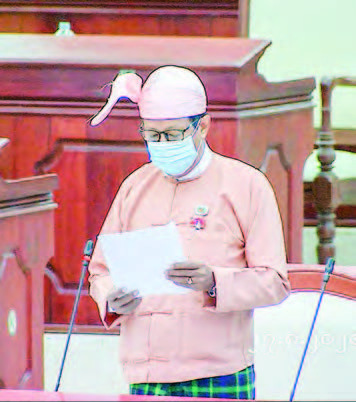
MP Dr Than Aung Soe ( Minhla constituency): : “Honourable Speaker, I am MP Dr Than Aung Soe from Minhla constituency. I would like to know if there will be a National Strategic Plan to implement “One Health” which combines human health, animal health and the environmental protection. The honourable Hluttaw Speaker and members of the Parliament, health is a blessing. Human needs to have both food safety which is to eat safe milk, meat and eggs and food security which is to have enough food. Now, COVID-19 is killing many people and threatening world’s economy. These kinds of disease start from animals and are called Zoonoses. 75% of human diseases are transmitted from animals such as Glanders and Farcy disease, Q Fever, Leptospirosis disease, H1N1, Swine fever, SARS, MERS, Psittacosis, COVID-19 and many more. Until now, 61.6% of 1,415 diseases are based on animals.”

“The reasons of the transmission of such diseases are because population explosion leads to invading animal world and being close to them, transport of meat around the world and wild life markets. Besides, carrying alive animals among the people in markets can spread the disease. If we look at the newly discovered diseases, they come from a place where the disease usually occurs and is transmitted to new places. Another form of the disease is that the virus doesn’t infect to normally infected people or animals but others and the disease occurs due to the mutation. At that time, the virus has become stronger and varieties of diseases can multiply unbelievably. COVID-19 is now mutating and changing from D614 to G614 as ten times more infectious disease. The diseases can be invented as a Bio Weapon by terrorists, too”

“ Honourable Hluttaw Speaker and Members of Parliament, cooperation of diagnostic doctors, veterinarians, lab technicians, environmentalists, researchers and experts from related fields to implement “One Health National Strategic Plan” can prevent the unthinkable terrifying new diseases. That is why I would like to ask through the Honourable Speaker. Thank you very much.”

The Speaker : Ministry of Health and Sport to answer.

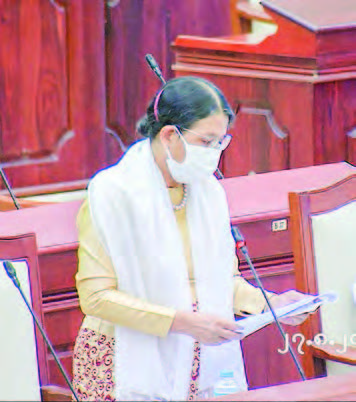
Answer by Dr Mya Lay Sein ( Deputy Minister for Health and Sports),

“ Honourable Pyithu Hluttaw Speaker and Members of Parliament, I will answer the question of the MP from Min Hla constituency. I would like to request to let me use Power Point and English language. In International Health Regulation-IHR (2005) enacted by WHO, a new framework was added to response among member nations if there is international emergency for public health. The framework calls for a link between the two spheres of human and animal health to effectively carry out disease surveillance and response in rare cases, including zoonotic diseases. Livestock, Breeding and Veterinary Department and the Department of Public Health have been working together to prevent and control the H5N1 virus since the outbreak of the Avian Influenza A-H5N1 pandemic in Myanmar in 2013.”

“In March 2016 in Nay Pyi Taw, One Health Strategy Workshop was held with representatives from UN agencies such as FAO, OIE, WHO, USAID and international organizations, environmental conservation, human health and animal health sectors in Myanmar and based on the findings of the workshop, a roadmap for one health priority and a strategic roadmap was developed.

Based on this information, various sections were discussed and datas were collected and finalized in the last week of September 2019, and the National One Health Strategic Framework and Action Plan of Myanmar 2019-2023 was finalized. The key ministries which are Ministry of Health and Sports, Ministry of Agriculture, Livestock and Irrigation, Ministry of Natural Resources and Environmental Conservation have reached an agreement in order to implement the strategic process.

The goal of implementing a single health plan is to reduce the burden of animal-to-human transmission of the disease, to prevent the new Zoonotic Diseases and Re-emerging Diseases and to response effectively if they occur and to prevent antibiotic problems and foodborne illness.

In the National One Health Strategic Framework and Action Plan of Myanmar (2019-2023), Antimicrobial resistance-AMR and six priority diseases that can be transmitted from animals to humans- Rabies, H1N1, TB, food poisoning, Japanese encephalitis and Rabies have been put in place to prioritize and are being implemented in the relevant sectors.

Public Health Department has distributed the guidelines for prevention and control of the diseases such as SARS, Food-Borne and Water-Borne Diseases, Ebola, MERS, Salmonella, Leptospirosis, Brucellosis, Tazoplasmosis, Pararsitic Infestation.

The Food and Drug Administration (FDA) under the Ministry of Health and Sports is responsible for food safety activities for the health and safety of human, animal, meat, fish and Agriculture; Livestock Breeding and Veterinary Department and the Department of Fisheries under the Ministry of Agriculture, Livestock and Irrigation are responsible for the quality and safety of meat, milk, eggs, and fishery products.

With the cooperation of public health care services and breeding and veterinary services , National-Level IRS- PVS National Bridging Workshop was held in 2019 and discussed making Road Map for Human Health and Animal Health and promoting the skills of staff to serve for Zoonotic Diseases.

The health guidelines and prevention, control and treatment measures of COVID-19 pandemic, which breaks out across the world including Myanmar, directives for isolation, diagnostic guidelines are also sent to the regions and states Public Health and Medical Services Department.

Moreover, regarding with the control of Anti-Microbial Resistance, the National Coordinating Centre is affiliated with National Health Laboratory and five Technical Working GroupsAwareness, Surveillance, Infection, Prevention and Control, Antimicrobial Usage and Research & Innovation are being organized under NCC. One Health Strategic Framework and Action Plan is carried out under One Health Approach with Anti-Microbial Resistance control, labs under the Ministry of Health and Sports and animal health labs under the Livestock Breeding and Veterinary Department.

The Medical Services Department and National Health Laboratory conduct diagnostic test on One Health Priority Diseases as (a) National malaria control department recognized by WHO, (b) National Japanese Encephalitis Laboratory, (c) laboratory test on Rabies by PCR, (d) diagnosis of bacteria that can cause food poisoning, (e) screening bacteria that can cause Rabies.

The Public Health Laboratory of Mandalay conducts Japanese Encephalitis as Sub-National Japanese Encephalitis Laboratory. The laboratories under the Ministry of Agricultural, Livestock and Irrigation and Livestock Breeding and Veterinary Department also test for rabies, H1N1 and marine products whether they contain microorganisms.

The COVID-19 tests are being carried out at NHL, DMR, Public Health Laboratory (Mandalay), Public Health Laboratory (Mawlamyine) with Real Time PCR and with GeneXpert in 26 townships of regions and states including General Hospital (Sittway).

The Department of Public Health Laboratory will be open soon in Taunggyi and Lashio townships to continue diagnostic works. The currently used PCR laboratories are included in External Quality Assessment Programme (EQAP) of the World Health Organization.

For the capacity building of the National Health Laboratory, the staff are given trainings for Quality, Biosafety and Biosecurity. The Laboratory Network Strengthening includes information exchange training of public hospitals and laboratories across the country. Thank you all.

The Hluttaw Speaker : :Members of Parliament, according to 2013 Pyithu Hluttaw Law Section 150, it is a question and answer that benefits the citizens. I would like to inform you that it will be published in the Gazette and state-owned newspapers.

(Translated by Ei Phyu Phyu Aung)

Photo- MNA

Ref: The Global New Light of Myanmar

New WHO technical package to help countries improve health data for COVID-19 response and beyond

Submitted by admin on 28 August 2020

TODAY (27 August, 2020), as part of its commitment to strengthening health information systems and improving health[1], especially in the context of the COVID-19 pandemic, WHO announced a new approach to improving access to life-saving data: the SCORE for Health Data Technical Package.

TIMELY AND RELIABLE DATA

The COVID-19 pandemic has highlighted the urgent need for timely and reliable data to drive strategic health action. Too many countries still lack both the infrastructure to routinely gather health data and the analytical capacity to use these data for effective health actions and emergency response.

 “Countries must be able to measure progress to make progress,” said WHO Director-General Dr Tedros Adhanom Ghebreyesus. “Particularly during COVID-19, reliable data is the best way to coordinate response efforts and improve health in all areas.”

 Accurate health data are necessary to understand specific country needs in order to improve health and save lives. Data also helps direct scarce resources to where they are needed most.

TECHNICAL PACKAGE

The SCORE (Survey, Count, Optimize, Review, Enable) Technical Package aims to improve the availability of timely, reliable, validated, and comparable health data. For the first time in a single, harmonized package, it represents all the key elements for optimized health information system performance. Simply put, SCORE will help governments around the globe set benchmarks and improve standards in healthcare.

 In response to the challenges of data availability highlighted in the WHO World Health Statistics 2020 report, SCORE includes more than 90 universally-accepted tools and standards for health information systems strengthening. “Using data to inform public health priorities and strategies has never been more important,” said Dr Kelly Henning, Director of Public Health Programmes at Bloomberg Philanthropies[2]. “The SCORE Technical Package provides country governments around the world with high-quality, essential technical guidance so that countries can strengthen their own data systems.” WHO is proud to partner with the Bloomberg Philanthropies Data for Health Initiative to deliver this timely resource to countries.

Below are some examples of how SCORE can improve individual lives and communities:

• The birth of a child is registered so they can access essential health services, attend school, and apply for a passport;

• A death is registered with cause-of-death accurately captured so that policy-makers have a better understanding of all-cause and COVID-specific mortality and associated risk factors and implement programs and policies to save lives;

• Health data are disaggregated by age, sex and cause of death to illustrate the root causes of health disparities and help direct resources to the most vulnerable groups such as those who do not speak the local language or face stigma and discrimination in their community;

• Health facilities have the capacity to regularly measure the quality of their services, workforce and patient data and can make a compelling case for increased funding to national and international stakeholders;

• Health data are integrated with other sectors so that social determinants of health such as pollution, sanitation and nutrition are addressed to reduce the overall burden of disease. The package’s initial release includes two documents:

• SCORE Essential Interventions – including an overview of health information systems, underlying elements, and indicators to assess progress with sample actions; and

• SCORE Tools and Standards -- including resources to address critical health data gaps and strengthen country health data.

 “We must keep score to save lives. WHO is committed to working with countries and partners to rapidly scale up capacity for data collection and use in order to improve policy and performance,” added Dr Samira Asma, Assistant Director-General for Data, Analytics and Delivery for Impact at WHO. “We must act now to invest in statistical systems in countries, respond to this pandemic and meet the SDGs and the Triple Billion targets. Our window of opportunity is closing, and we cannot wait to address data gaps. Data use to address country needs has to be a priority today.

SUSTAINABLE HEALTH SYSTEMS

Country-owned, disaggregated data will be essential for more resilient and sustainable health systems going forward. COVID-19 is both a wake-up call and a stark reminder of the challenges we still have to address. But it is also an opportunity to build back better through solidarity, information-sharing and collaboration.

SCORE is one example of how a collaborative approach can benefit countries by providing a common set of tools based on shared standards. This package is designed to be practical, actionable and flexible. We will only be successful in combatting COVID-19 if we work together.

 Future components of the SCORE Technical Package are due to be released later this year, including the SCORE Assessment Instrument and global, regional and country status reports. Together, these will provide a complete package of information to plan and monitor progress against national and subnational priorities as well as global targets.

SOURCE: WHO

PHOTO FROM PIXABAY

Ref: The Global New Light of Myanmar

MoI launches books on reform activities of government

Submitted by admin on 28 August 2020

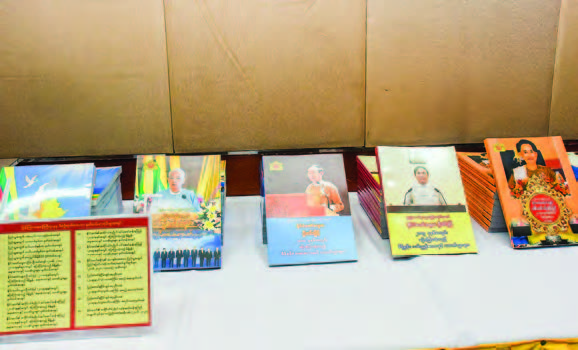
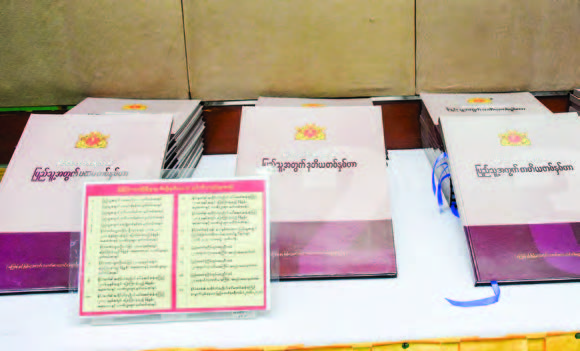
THE Ministry of Information has published the books on the reform processes of government.

The launching ceremony of books was held at the ministry’s headquarters in Nay Pyi Taw yesterday afternoon.

Union Minister for Information Dr Pe Myint, permanent secretaries, departmental heads, officials from the executive, legislative, and judiciary pillars and journalists attended the ceremony.

During the ceremony, the Union Minister said that the Printing and Publishing Department played a key role for the ceremony and the event aims for sharing knowledge about the reform activities of the government.

He added that the MoI is a bridge between the government and the public for information, knowledge and entertainment.

The books on reform activities are for the public information reported by the elected government and the MoI has put its efforts in this task.

There are 17 kinds of books, including speeches of the Heads of State, journeys and one-year performances, he said.

The first book included President U Win Myint’s speeches, directives and felicitation messages in 2018, and the second book carries his speeches, directives and felicitation messages in 2019.

Another series of books feature speeches of former President U Htin Kyaw made between 2016 and 2018 while the other expresses speeches, remarks and felicitation messages of State Counsellor Daw Aung San Suu Kyi in 2017,2018 and 2019 and her messages to the public in 2019.

The MoI made concerted efforts to achieve the full documents, the audio files and collections of answer and question during the meeting with the public.

Thoughts, opinions, views and political stance of the leaders could be known through these books and the books will be the reference books for the people working in respective departments and in media field.

Moreover, State Counsellor Daw Aung San Suu Kyi made her trip to 14 Regions and States. She met with the local people in her every trip. So, her activities have been collected as a book about her trips around the Union from 2016 to 2020. It is not a speech collection but her travel records. The 1st, 2nd and 3rd sessions of Union Peace Conference-21st Century Panglong books include records on meeting and photos will become reference for national reconciliation, national solidarity, efforts for peace and history of 21st century Panglong.

Similarly, the ministry has compiled the first 100-days performances of the governmental organizations and ministries and first 1-year performance of the Union Government by making interviews with the ministries and broadcasting via MRTV and they are also printed in papers as special feature.

The yearly performance records are now out and Union Government’s 5th–year performance will be released by the end of year.

These books contain performances of Pyidaungsu, Pyithu and Amyotha Hluttaws, Union Supreme Court, respective ministries, Nay Pyi Taw Council, Central Bank of Myanmar, Union Attorney–General Office, Union Auditor–General Office, Union Civil Service Board including Chief Ministers of Regions and States government.

The part 1 of the reform activities of government in 4th -year term includes performances of the respective ministries and Union-level organizations, while the part 2 carries performance of region and state governments. So, it can be regarded as the real records of the Government.

The Union Minister also expressed his hope to print the Union Government’s 5th-year performance in coming year and continued that the ministry will collect all records of Government’s performance for the public knowledge and next generations.

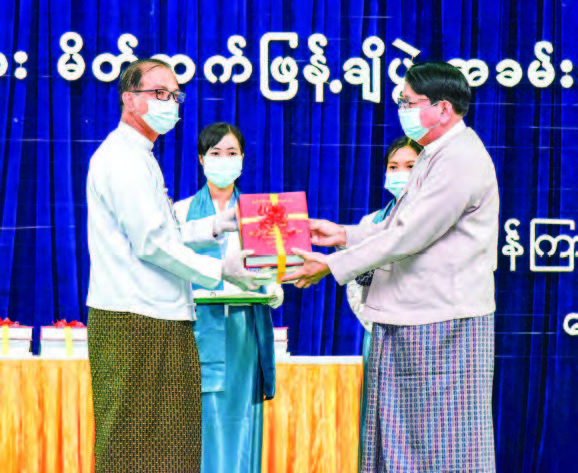
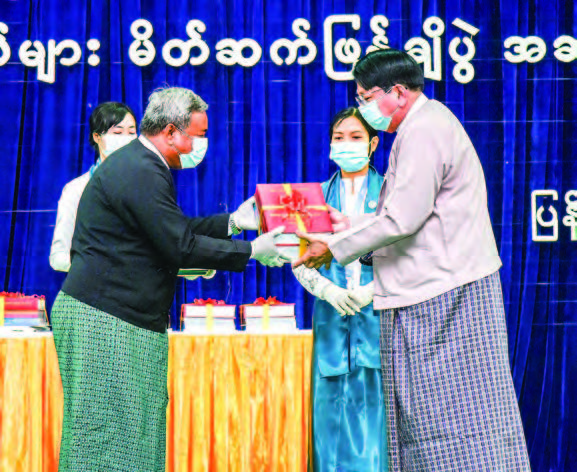
Then, Union Minister Dr Pe Myint presented the books to Permanent Secretary U Kyaw Soe from the Office of Pyidaungsu Hluttaw, Permanent Secretary U Aung Naing Oo who represents the executive pillar, Deputy Permanent Secretary U Thant Zin who represents judiciary pillar from the Union Attorney–General’s Office. Colonel Soe Than from the Tatmadaw True News Information Team, Deputy Director-General Dr Myo Min Kyi Win from the National Archives Department, Director Daw Mya Oo from the National Library and Snapshot Journal’s Nay Pyi Taw Office in Charge Ye Ye (Pyinmana).

Permanent Secretary for Ministry of Planning, Finance and Industry U Tun Tun Naing expressed words of thanks on behalf of all ministries.

The published books include speeches, remarks and felicitation messages delivered by President U Win Myint in 2018 and 2019, speech, remarks and felicitation message delivered by former President U Htin Kyaw in 2016, 2017 and 2018, speeches, remarks and felicitation messages delivered by State Counsellor Daw Aung San Suu Kyi in 2017, 2018 and 2019, State Counsellor Daw Aung San Suu Kyi’s trips around the Union from 2016 to 2020, and the performance of government on holding first, second and third sessions of Union Peace Conference-21st Century Panglong.

MNA

(Translated by Khine Thazin Han)

Photo : MNA

 Ref: The Global New Light of Myanmar

Myanmar Constitutional Tribunal Chairman joins 4th Congress of AACC

Submitted by admin on 28 August 2020

CHAIRMAN of the Constitutional Tribunal of the Union U Myo Nyunt and its member U Myint Win joined the 4th Congress of AACC (Association of Asian Constitutional Courts and Equivalent Institutions) which was held via video conferencing on 26-27 August.

The Constitutional Council of the Republic of Kazakhstan, the rotating chair country, pre-sided over the congress under the theme of “The XXI century Constitution – the Rule of Law, the Value of Person and the Effectiveness of the State".”

Attending the congress alongside President of the Republic of Kazakhstan Kass-ym-Jomart Tokayev were constitutional tribunals and courts from 18 other countries such as Kyrgyzstan, Kazakhstan, the Republic of Korea, Myanmar, Mongolia, Thailand, Russia, Indonesia and India, and chief justices of Constitutional Court, Council and Tribunal, chairpersons, judges, representatives of the Venice Commission from Europe, Eurasian Association of Constitutional Review Bodies, international organizations and legal officers from the universi-ties of Kazakhstan.

During the congress, the Constitutional Tribunal of Myanmar read a paper titled ‘Challenges and the Ways of Solutions: Myanmar Experiences’.

The paper discussed challenges of Myanmar’s Constitution, definition of Constitution by constitutional tribunal, review on laws approved by lawmakers, judgements on proposals and other related facts.

Permanent Secretary U Hla Htay and Director U Nyi Nyi Lwin joined the Secretary General Meeting of AACC held yesterday afternoon.

MNA

(Translated by Khine Thazin Han)

Photo : MNA

 Ref: The Global New Light of Myanmar

Chief Justice of Union holds meeting with regional high courts

Submitted by admin on 28 August 2020

CHIEF Justice of the Union U Htun Htun Oo presided over a meeting with senior legal officers from the high courts of states and regions yesterday.

The meeting was held at the office of Supreme Court of the Union in Nay Pyi Taw, and the Chief Justice discussed matters related to following guidelines for prevention of COVID-19 in court proceedings, helping clients, lawyers and visitors as much as possible without stop-ping court proceedings in order to provide rule of law, access to justice, and judicial remedy, conducting court trials in accordance with laws and regulations to prevent visitors, judges, and court staff from being infected with the disease, making adaption to situations of relevant are-as in trying to control the spread of the disease, using social media for raising public awareness about judicial information and statements.

He also talked about various matters including the efforts to draft a bill to amend the Code Of Civil Procedure for court led meditation, providing the power to deliver verdicts for cases related to the Discrimination Act, issuing bylaws for the Discrimination Act, and copying case files.

The meeting focused on response of the judicial sector to the COVID-19 outbreak, and making necessary preparations.

The meeting was attended by the Chief Justice of the Union, Union Supreme Court judges, Region/State High Court Chief Justices, Permeant Secretary, Director–General, Deputy Di-rectors–General, Directors, and Judicial Officers from Regions/States. The Rakhine State High Court Chief Justice and the Rakhine State Judicial Officer participated in the meeting via videoconference. The meeting was held in accordance with the COVID-19 preventive guidelines set by the Ministry of Health and Sports.

MNA

(Translated by Maung Maung Swe)

Photo : MNA

 Ref: The Global New Light of Myanmar

Subscribe to Nay Pyi Taw