
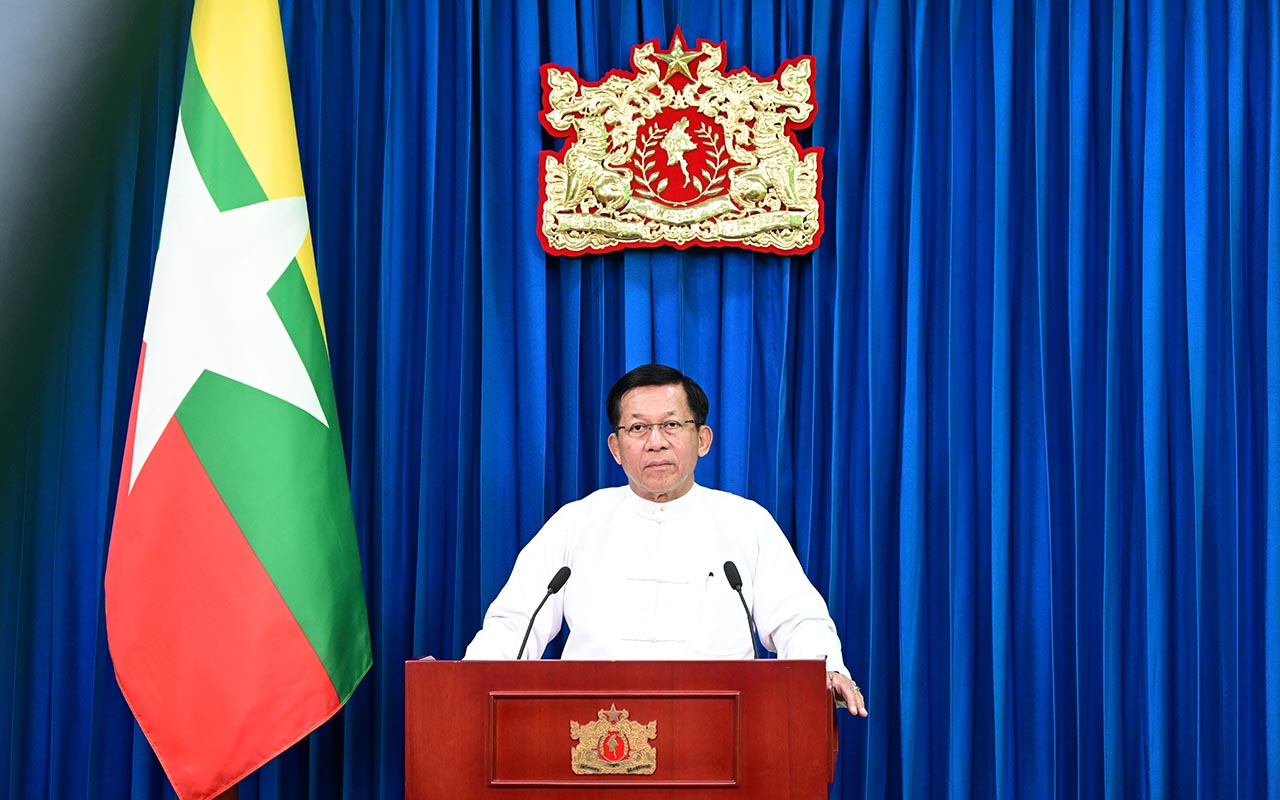
Everybody, Mingalaba!
I extend my warm greetings to all distinguished guests attending today’s 54th Myanmar Health Research Congress on physical and mental well-being.
Myanmar’s Health Research Congress have been held since 1965 with the objectives of advancing health-related knowledge through research and improving the standard of health care, as well as providing a forum for relevant health professionals to learn about and discuss the practical application of research findings. To date, the congress has been successfully convened for the 54th time.
In today’s era of science and technology, everything is constantly advancing and changing at a rapid pace. Therefore, it has become essential to continuously study and keep up to date so that medical sciences, modern diagnostic and treatment tools, new drugs and therapies, and applications supported by Artificial Intelligence (AI) technology can continue to develop effectively.
At Myanmar’s Health Research Congress, not only domestic researchers but also international researchers participate, presenting research papers and research posters. In addition, symposiums and subject-specific scientific talks are widely held, providing opportunities to present and discuss updated knowledge and research findings in the health field. It is encouraging and a matter of pride to see that Myanmar’s health research activities are being conducted at a level comparable to international standards.
The theme of the 54th Myanmar Health Research Congress has been set as “Better Health Through Medical Research”, reflecting its main objective of improving public health through the conduct of medical research.
Medical research activities utilize evidence-based research findings to make disease detection methods, prevention, and treatment programs more effective and efficient. In addition, they help improve public health services and enable the formulation and implementation of health policies that are appropriate and up-to-date for the country. Therefore, the results of medical research contribute to raising the overall health standards of the nation and can also help extend the life expectancy of the country’s population.
At present, it is necessary to control non-communicable diseases such as diabetes, hypertension, and heart disease, which are widespread and likely to increase. To this end, the World Health Organization, the Department of Public Health, the Department of Medical Services, the Department of Human Resources for Health and the Department of Medical Research under the Ministry of Health jointly conducted the “Study on the Risk of Non-Communicable Diseases in Myanmar (2024)”. According to the research findings, in addition to preventive measures to reduce the rising incidence of non-communicable diseases, it is also necessary to support the public in adopting healthy habits, including balanced nutrition. In the 2025-2026 financial year, the government has approved K1.5 billion in funding to enable not only the Department of Medical Research but also other relevant departments and medical-related universities to carry out research activities.
In addition, with the leadership of the Ministry of Health, and in collaboration with the Department of Medical Research, the Department of Public Health, and the Department of Medical Services, a nationwide study was conducted on health-related knowledge among secondary school students in Myanmar. Since secondary school students represent the future generation of the nation, it is recommended that school health services be further improved based on the findings of this research.
What I would like to emphasize next is the need to conduct research that can help in the prevention and control of locally occurring and infectious diseases, as well as seasonal illnesses, and that can enable early detection of cancer and support successful treatment. It is necessary to carry out these studies in collaboration with international partners, applying modern laboratory technologies and research methodologies. I would like to encourage these efforts to be conducted even more effectively and on a broader scale than they are currently.
In particular, to ensure that our people have good basic health and can live long, healthy lives, it is necessary to expand research on nutrition, food safety, and practical health studies related to healthy living practices. The findings from this research should also be widely shared with the public through health education and preventive programmes.
It is also necessary to expand research on medical treatments, hospital administration, and management. In conducting health-related research, collaboration should take place with medical and pharmacy universities under the Ministry of Health, hospitals, disease control programmes, primary healthcare workers, and community-based organizations.
It is also necessary to promote our country’s traditional medicine and traditional medicinal products internationally, to advance the development of traditional medicine, and to better protect the health of the people through traditional medical practices. Regarding traditional medicine, practical research should be conducted in collaboration with the Department of Traditional Medicine to obtain accurate and reliable data and findings.
Many young people and scholars in our country have a research-minded spirit, and it is necessary for them to carry out research activities systematically and ethically. To achieve this, training courses on research techniques and research ethics should be continuously offered. I would like to emphasize the importance of cultivating an understanding among healthcare workers that conducting research is essential for providing better healthcare and of fostering a thriving research culture in the country.
In 2025, researchers and scholars under the Ministry of Health were able to attend international training courses and workshops, participate in international conferences by presenting papers and giving lectures, and serve as speakers at various events. In addition, our country was able to host medical conferences as the host nation.
In terms of international collaboration, the Department of Medical Research has been recognized as a WHO Collaborating Centre for Research & Training on Malaria (WHO-CC) since 25 September 2003, and this recognition will continue until 2028, for cooperation in malaria research, disease diagnosis and treatment for antibiotic drug resistance. The department has been actively involved, as a WHO-CC, in research, training, education, and the collection and integration of information related to malaria and antibiotic drug resistance. This is a source of great pride and satisfaction for the development of the national health sector.
We understand that in building our nation, it is essential for young people to have knowledge and skills, and for all ethnic communities to be healthy and resilient. Therefore, one of our objectives is “To emphasize enhancing the national education and health sectors for sustainable development of the State”. In promoting the health sector, research activities and research conferences like this one play a very important role, and we believe they will lead to successful progress and achievements.
In conclusion, the research findings presented at this 54th Myanmar Health Research Congress will greatly support the Ministry of Health’s objectives of ensuring a long and healthy life for everyone and reducing the risk of disease for all. We also believe that by applying the discoveries from the Department of Medical Research, the health of the public can be further improved. I would like to encourage researchers to continue making every effort to conduct high-quality research that can propel the development of a health sector capable of standing alongside international standards, thereby contributing to the nation’s overall progress.
Thank you all.
#TheGlobalNewLightOfMyanmar