
The hearings concerning the case between The Gambia and Myanmar are being held at the International Court of Justice (ICJ) in The Hague, the Netherlands, from 12 to 29 January.
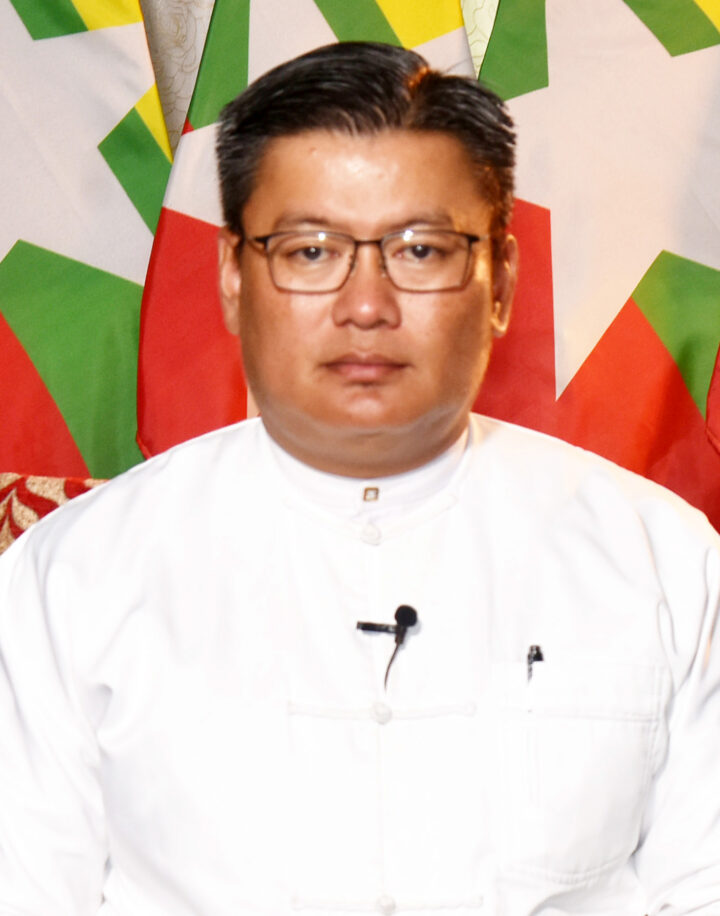
Here is the interview with Senior Advisor of Myanmar Institute of Strategic and International Studies, Founder and Executive Director of the Thayninga Institute for Strategic Studies, and Director Dr Nai Swe Oo of the Myanmar Narrative Think Tank.
I would like to discuss first that I personally conducted field research in Buthidaung and Maungtaw areas in 2018 and 2019 regarding the Bengali issue that occurred in Rakhine State. I am someone who has directly observed and understood the ground realities.
Moreover, we, Think Tank, are involved in discussions on the repatriation of Bengalis. While holding regular dialogues between the Think Tank of Bangladesh and Myanmar, I have regularly taken part in the discussions since 2018 and 2019.
I would like to briefly discuss the current situation in which Myanmar is facing legal proceedings at the ICJ. On 11 November 2019, The Gambia, a small country located in West Africa, initiated legal proceedings against Myanmar at the International Court of Justice with the support of the Organization of Islamic Cooperation (OIC).
The Gambia made allegations claiming that Myanmar violated the 1948 Convention on the Prevention and Punishment of the Crime of Genocide (Genocide Convention) and filed the lawsuit on that basis.
The main point is that the case was filed based on allegations related to incidents that occurred in northern Rakhine State in 2016 and 2017. However, when we look at The Gambia, it is a small country located thousands of miles away from Myanmar in West Africa. From Myanmar’s perspective, The Gambia has no legal obligation or standing to bring a case against Myanmar. The Gambia is merely acting as a proxy of the OIC. The next fact is that there is no dispute between The Gambia and Myanmar. The place alleged by The Gambia did not occur within Gambian territory, nor did it have any impact on Gambian citizens. It can therefore be seen that The Gambia’s accusations are solely one-sided.
However, in January 2020, the ICJ issued Provisional Measures, and Myanmar had to submit reports every six months.
Myanmar, as a responsible member of the international community, has regularly submitted the required reports. However, on the other hand, The Gambia and some other countries have criticized these measures as insufficient. Nonetheless, it can be seen that Myanmar has faithfully fulfilled its obligations.
In July 2022, the Court rejected Myanmar’s preliminary objections and confirmed that it has jurisdiction over the case. It was also observed that, in addition to The Gambia, 11 countries, including Canada, Denmark, France and Germany, had the right to intervene in the case under Article 63.
I will continue to discuss the current situation. At present, the case has reached the hearings stage. A Myanmar delegation led by Union Minister U Ko Ko Hlaing for the Ministry 2 of the President’s Office, currently in The Hague, the Netherlands, is serving as Agent of Myanmar and presenting the defence at the ICJ. However, it should be noted that cases at the ICJ are not resolved in a short period of time and often take many years.
In other words, the presence of a Myanmar delegation at the ICJ in The Hague, the Netherlands, represents the legitimacy of the Myanmar government.
MNA/KTZH
#TheGlobalNewLightOfMyanmar